Luo Guanzhong
Introduction
Luo Guanzhong was a prominent Chinese novelist and playwright of the Yuan and early Ming dynasties. He is best known as the author of Romance of the Three Kingdoms, one of the Four Great Classical Novels of Chinese literature. His works have had a profound influence on Chinese culture, history, and literature, and they continue to be celebrated and adapted in various forms, including opera, film, television, and games.
Early Life and Background
Little is definitively known about Luo Guanzhong's life, and much of his biography is derived from historical speculation and literary tradition. He is believed to have been born in the late Yuan Dynasty (1271–1368) and lived into the early Ming Dynasty (1368–1644). His birthplace is often cited as Taiyuan in Shanxi province, though some sources suggest he may have been from Hangzhou or another region. Luo lived during a time of great political upheaval, as the Yuan Dynasty was declining and the Ming Dynasty was emerging. This tumultuous period likely influenced his interest in historical and political themes, which are central to his works.
Major Works
Romance of the Three Kingdoms
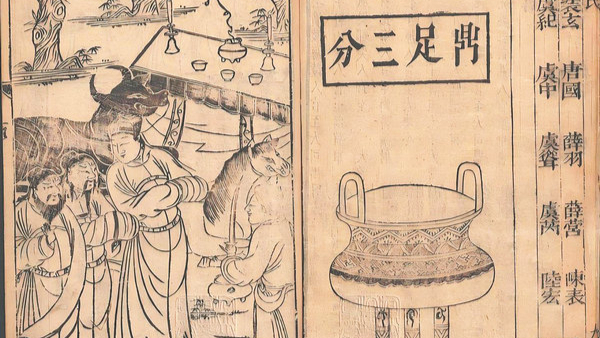
Luo Guanzhong's most famous work, Romance of the Three Kingdoms, is a historical novel based on the events of the late Eastern Han Dynasty (25–220) and the Three Kingdoms period (220–280). Written in the 14th century, the novel is a blend of history, legend, and mythology, dramatizing the lives of feudal lords, military strategists, and their retainers during this era of political fragmentation and warfare.
The novel is celebrated for its intricate plot, rich character development, and exploration of themes such as loyalty, betrayal, strategy, and the cyclical nature of history. It contains over 800,000 words, more than 1,100 characters, and 120 chapters. Luo's ability to bring historical figures like Liu Bei, Cao Cao, Zhuge Liang, and Guan Yu to life has made these characters enduring icons in Chinese culture.
The novel's influence extends far beyond literature. It has inspired countless adaptations in Peking Opera, films, television dramas, video games, and even card games. For instance, the Peking Opera piece The Battle of Red Cliff, based on a key episode in the novel, remains a classic of the genre.
Other Works
In addition to Romance of the Three Kingdoms, Luo Guanzhong is credited with contributing to other literary works, though his authorship is sometimes debated. These include:
-
Water Margin, another of the Four Great Classical Novels, which depicts the lives of outlaws during the Song Dynasty (960-1279). Ming Dynasty editions of Water Margin, along with relevant documentary evidence, indicate a significant involvement by Luo Guanzhong in the novel's creation. While some attribute sole authorship to Luo, others credit Shi Nai'an with compilation, identifying Luo as the editor. This suggests that Luo at minimum participated in the compilation or editorial process, and potentially served as the principal author. However, due to the limitations of surviving primary sources, scholars can only assert his substantive contribution; further distinctions regarding sole authorship, co-authorship, or subsequent editorial revision remain speculative.
-
Quelling the Demons' Revolt, a lesser-known novel that combines historical and supernatural elements.
Literary Style and Legacy
Luo Guanzhong's writing is characterized by its vivid storytelling, complex characters, and moral undertones. He skillfully combines historical records with folklore and his own imagination, creating narratives that are both entertaining and thought-provoking. His works often explore the interplay between fate and human agency, as well as the ethical dilemmas faced by individuals in times of crisis.
Luo's influence on Chinese literature is immense. Romance of the Three Kingdoms has been compared to the works of William Shakespeare for its dramatic depth and cultural significance. The novel's themes and characters have become ingrained in the collective consciousness of Chinese-speaking communities worldwide.
Cultural Impact
Luo Guanzhong's Romance of the Three Kingdoms has been a rich source of material for Peking Opera and other traditional Chinese performing arts. Iconic episodes such as the Battle of Red Cliff and the story of Guan Yu's loyalty have been adapted into operatic performances that showcase the art form's unique blend of singing, acting, and martial arts.
The novel has inspired numerous modern adaptations, including:
-
Television dramas like The Advisor Alliance, which focuses on the life of Sima Yi, a key figure in the Three Kingdoms period.
-
Films such as Red Cliff, directed by John Woo, which dramatizes the famous naval battle.
-
Video games like Dynasty Warriors and Legend of the Three Kingdoms, which bring the novel's characters and battles to life in interactive formats.
Luo Guanzhong's works have also influenced other forms of art, including puppetry and calligraphy. For example, puppeteer Hong Jindiao incorporates characters like Guan Yu into his performances, blending traditional techniques with modern storytelling.








